جواب درس اول انگلیسی یازدهم فنی حرفه ای ✏️ صفحه ۱۵ تا ۳۹
گام به گام درس اول (1) کتاب انگلیسی (2) یازدهم هنرستان ؛ حل تمرین ها به همراه ترجمه کامل
جواب درس اول کتاب انگلیسی پایه یازدهم فنی حرفه ای: در این نوشتار پاسخ سوالات و ترجمه تمرینات صفحه ۱۵ تا ۳۹ کتاب زبان انگلیسی (۲) یازدهم هنرستان و کاردانش از درس ۱ اول با عنوان The Value of Knowledge را برایتان آماده کردهایم. با بخش آموزش و پرورش ماگرتا همراه شوید.
همچنین بخوانید: گام به گام انگلیسی (۲) یازدهم فنی حرفه ای و کاردانش
معنی متن صفحه ۱۵ درس اول انگلیسی یازدهم فنی حرفه ای
The Value of Knowledge
ارزش دانش
Seek knowledge
from the cradle to the grave
به دنبال دانش باشید
از گهواره تا گور
Holy Prophet (PBUH)1
پیامبر اکرم (ص)
1. Peace Be Upon Him
درود بر او باد
جواب و معنی Get Ready صفحه ۱۷ ، ۱۸ و ۱۹ درس ۱ انگلیسی یازدهم فنی
Part One
بخش اول
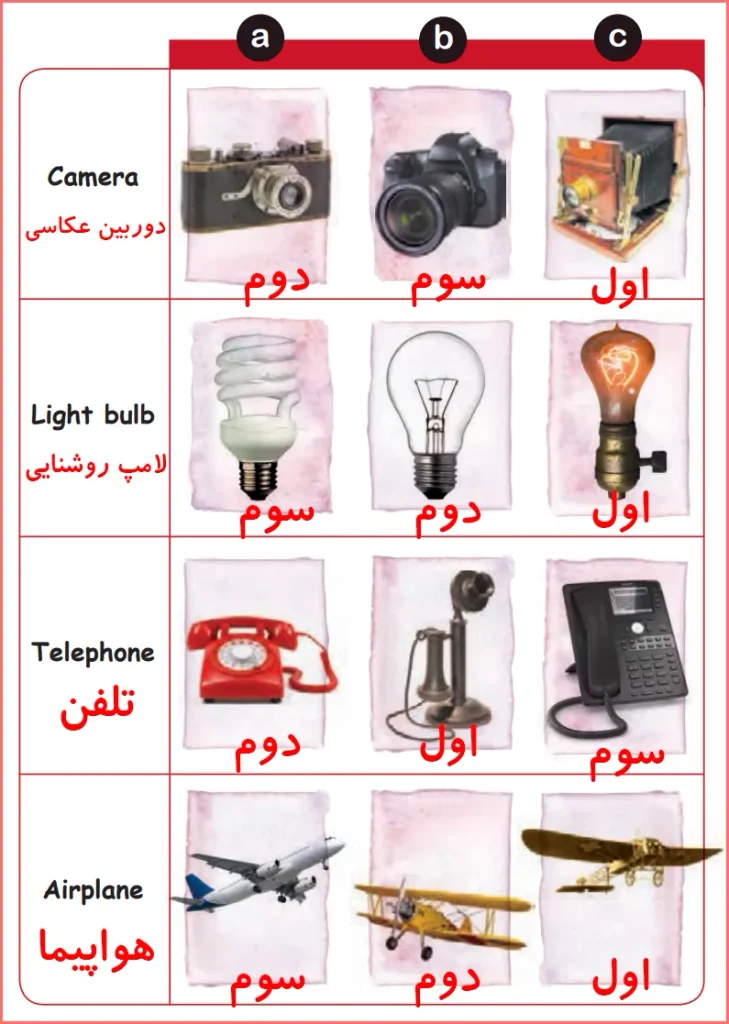
A. Match the pictures with the sentences.
آ. تصاویر را به جملهها وصل کنید.

(b) This gives us an easier life when there is no light.
(c) People use this to talk with someone in another place.
(d) We use this to take and keep pictures very easily.
(a) This helps us travel very fast to far places.
Get Ready – Match Pictures with Sentences
آمادگی برای درس – تطبیق تصاویر با جملات مرتبط همراه با ترجمه دقیق
B. Order the followings from ‘oldest to newest’.
ب. موارد زیر را از قدیمیترین به جدیدترین مرتب کنید.
Part Two
بخش دوم
A. Match the pictures with the words.
آ. تصاویر را به کلمات وصل کنید.
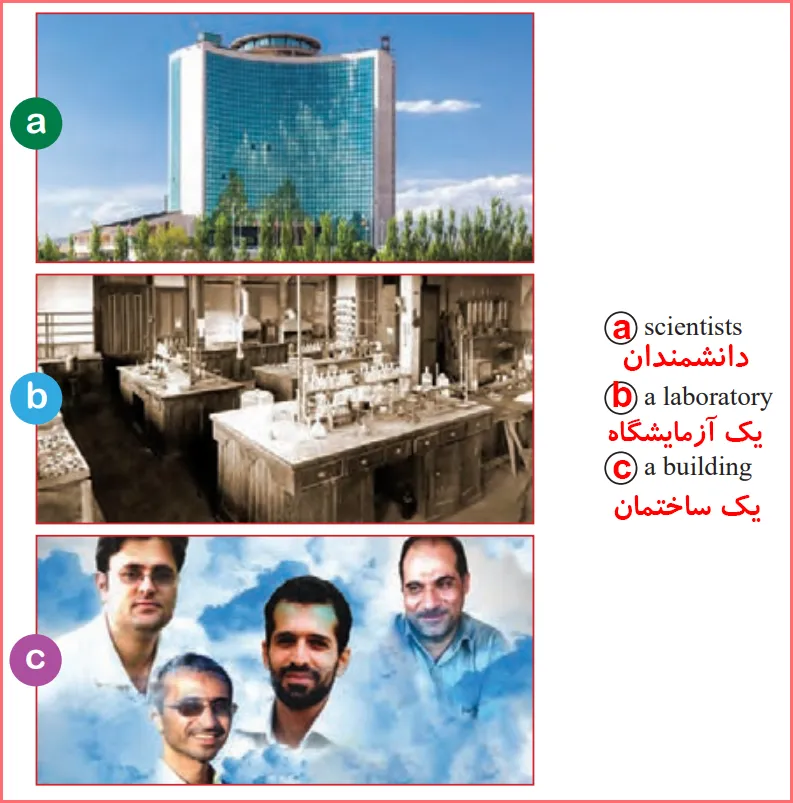
(a) scientists – دانشمندان
(b) a laboratory – یک آزمایشگاه
(c) a building – یک ساختمان
B. Choose an appropriate adjective for each word above.
ب. یک صفت مناسب برای هر یک از کلمات بالا انتخاب کنید.
modern a building – ساختمان مدرن
Iranian scientists – دانشمندان ایرانی
old a laboratory – آزمایشگاه قدیمی
پاسخ و معنای Conversation صفحه ۲۰ درس اول انگلیسی یازدهم فنی
medicine,famous,
build,
Believe me!
Cool!
،پزشکی، مشهور
،ساختن
!حرفم را باور کن
!باحال
Roya and Mahsa are leaving the library.
Roya: When I came in, you were reading a book. What was it?
Mahsa: I was reading a book about famous Iranian scientists.
Roya: But such books are not very interesting.
Mahsa: At first I had the same idea, believe me!
Roya: Did you find it useful?
Mahsa: Oh yes. Actually I learned many interesting things about our
scientists’ lives.
Roya: Like what?
Mahsa: For example Razi1 taught medicine to many young people
while he was working in Ray Hospital. Or Nasireddin Toosi
built Maragheh Observatory when he was studying the planets.
Roya: Cool! What was the name of the book?
Mahsa: Famous Iranian Scientists
Conversation – Page 20
مکالمه درس اول انگلیسی یازدهم فنیحرفهای (ارزش دانش)
Roya and Mahsa are leaving the library.
Questions
پرسشها
Answer the following questions orally.
به پرسشهای زیر بهصورت شفاهی پاسخ دهید.
1. Were Mahsa and Roya in a laboratory?
پاسخ: No, they weren’t. They were in the library.
ترجمه: آیا مهسا و رؤیا در یک آزمایشگاه بودند؟
نه، نبودند. آنها در کتابخانه بودند.
2. Who came to the library sooner, Mahsa or Roya?
پاسخ: Mahsa came to the library sooner. (Because when Roya came in, Mahsa was already reading a book).
ترجمه: چه کسی زودتر به کتابخانه آمد، مهسا یا رؤیا؟
مهسا زودتر به کتابخانه آمده بود. (چون وقتی رؤیا آمد داخل، مهسا از قبل داشت کتاب میخواند).
3. Do you know any interesting story about famous scientists?
پاسخ: Yes. For example, Ebn-e Sina (Avicenna) wrote many important books in medicine and philosophy.
ترجمه: آیا داستان جالب دیگری دربارهٔ دانشمندان معروف میشناسید؟
بله. برای مثال، ابنسینا کتابهای مهم زیادی در زمینهٔ پزشکی و فلسفه نوشت.
Questions & Answers – Page 20
پاسخ به پرسشهای مکالمه درس اول انگلیسی یازدهم فنیحرفهای
به پرسشهای زیر بهصورت شفاهی پاسخ دهید.
نه، نبودند. آنها در کتابخانه بودند.
مهسا زودتر به کتابخانه آمده بود. (چون وقتی رؤیا آمد داخل، مهسا از قبل داشت کتاب میخواند).
بله. برای مثال، ابنسینا کتابهای مهم زیادی در زمینهٔ پزشکی و فلسفه نوشت.
پاسخ New Words and Expressions صفحه ۲۱ و ۲۲ درس ۱ انگلیسی یازدهم فنی
A. Look, Read and Practice.
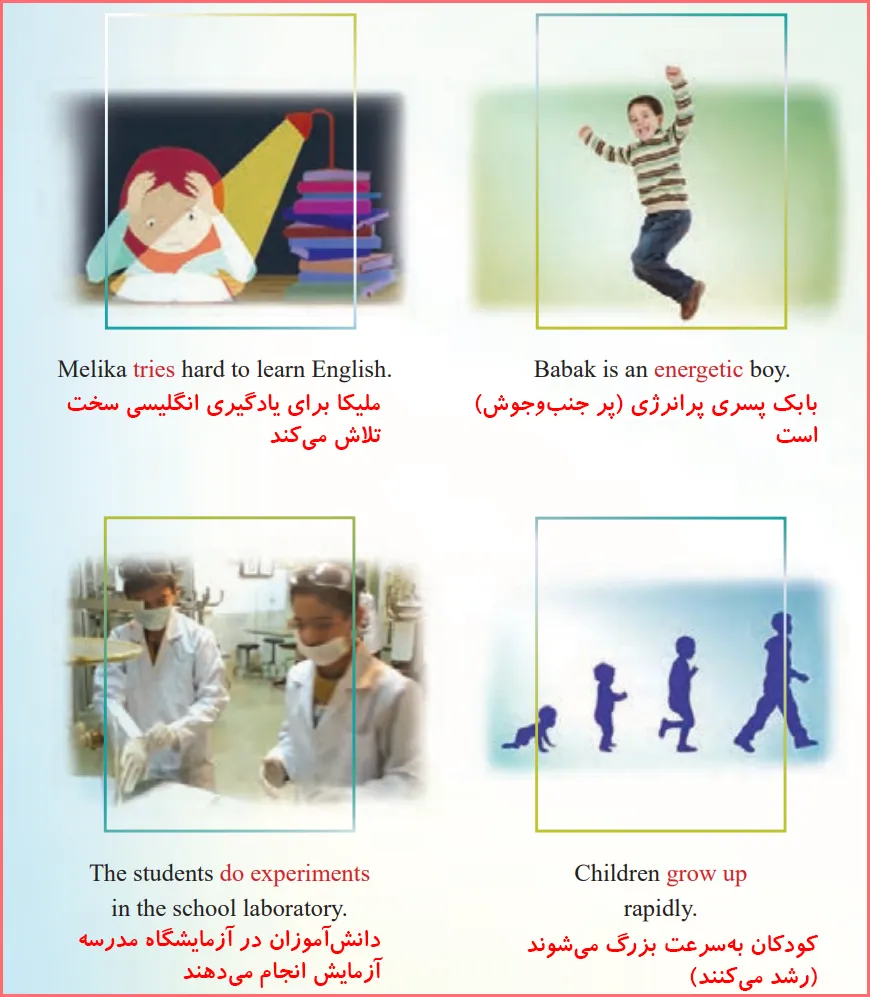
Melika tries hard to learn English.
ترجمه: ملیکا برای یادگیری انگلیسی سخت تلاش میکند.
واژهٔ کلیدی: try (tries) تلاش کردن / سعی کردن
Babak is an energetic boy.
ترجمه: بابک پسری پرانرژی (پر جنبوجوش) است.
واژهٔ کلیدی: energetic پرانرژی / فعال
The students do experiments in the school laboratory.
ترجمه: دانشآموزان در آزمایشگاه مدرسه آزمایش انجام میدهند.
واژهٔ کلیدی: do experiments آزمایش انجام دادن
Children grow up rapidly.
ترجمه: کودکان بهسرعت بزرگ میشوند (رشد میکنند).
واژهٔ کلیدی: grow up بزرگ شدن / رشد کردن | rapidly بهسرعت

She is doing research on blood cells.
ترجمه: او در حال انجام تحقیق بر روی سلولهای خونی است.
واژهٔ کلیدی: do research (doing research) تحقیق انجام دادن / پژوهش کردن
He has the flu and feels weak.
ترجمه: او آنفولانزا دارد و احساس ضعف میکند (احساس ناتوانی میکند).
واژهٔ کلیدی: feel weak احساس ضعف کردن / ضعیف بودن
No success is possible without hard work.
ترجمه: هیچ موفقیتی بدون سختکوشی (کار و تلاش زیاد) امکانپذیر نیست.
واژهٔ کلیدی: success موفقیت
Edison invented the first light bulb.
ترجمه: ادیسون اولین لامپ روشنایی را اختراع کرد.
واژهٔ کلیدی: invent (invented) اختراع کردن (اختراع کرد)
جواب و ترجمه تمرین صفحه ۲۳ درس اول انگلیسی یازدهم فنی
B. Read and Practice.
ب. بخوانید و تمرین کنید
solve: to find an answer to a problem
We can help you solve your problems.
develop: to grow or change into a stronger, larger or better form
This book can develop your speaking skill.
belief: something that you believe
Her belief in Allah gave her hope during difficult times.
quit / give up: to stop doing something
Fortunately, his father is going to quit smoking.
He gave up his work without saying anything to us.
thousands of: a large number of things or people
There are thousands of things I want to do.
B. Read and Practice – Page 23
بخش بخوانید و تمرین کنید – واژگان کلیدی درس اول انگلیسی یازدهم فنی
C. Go to Part III of your Workbook and do A and B.
ث. به بخش سوم کتاب کار خود (Workbook) بروید و تمرینهای A و B را انجام دهید.
معنی ریدینگ (Reading) صفحه ۲۴ درس ۱ انگلیسی یازدهم فنی
No Pain No Gain
نابرده رنج، گنج میسر نمیشود
Human knowledge develops with scientists’ hard work. Many great
men and women try hard to find facts, solve problems and invent
things.
Some of these scientists did not have easy lives. But they tried hard
when they were working on problems. They never felt weak when they
were studying. They never gave up when they were doing research.
There are great stories about scientists and their lives. One such a story
is about Thomas Edison. As a young boy, Edison was very interested
in science. He was very energetic and always asked questions. Sadly,
young Edison lost his hearing at the age of 12. He did not attend
school and learned science by reading books in the library himself.
When he grew up he worked in different places, but he never lost his
interest in making things. Edison was famous for doing thousands of
experiments to find answers to problems. He said, “I never quit until
I get what I’m after”. Edison had more than 1,000 inventions
and was very successful at the end of his life.
Many great names had stories like this.
But the key to their success is
their hard work and belief in
themselves. If you want to get
what you want, work hard
and never give up.
Reading: No Pain No Gain
ترجمه ریدینگ: نابرده رنج، گنج میسر نمیشود (صفحه ۲۴ زبان یازدهم فنی)
پاسخ Reading Comprehension صفحه ۲۵ درس اول انگلیسی یازدهم فنی
A. Choose the best answer.
1) Where did Edison learn science?
a) In the library b) At school c) In the laboratory
2) How did Edison find answers to problems?
a) By sleeping in the laboratory
b) By doing many experiments
c) By quitting what he was after
3) Which is not true about scientists?
a) They find facts
b) They invent things
c) They feel weak
B. True/False
1) Edison finally lost his interest in inventing things. T 🔘 F 🔘
2) Edison did not attend school at all. T 🔘 F 🔘
3) Hard work is the key to scientists’ success. T 🔘 F 🔘
C. Match two halves.
1. After Edison lost his hearing
2. When scientists were working on problems
3. If you like to be successful
a. you must not feel weak.
b. he did not quit studying.
c. they did not give up.
d. he became a famous person.
Reading Comprehension – Page 25
پاسخ و ترجمه تمرینهای درک مطلب درس اول زبان انگلیسی پایه یازدهم فنیحرفهای
جواب و معنی Grammar صفحه ۲۶ ، ۲۷ ، ۲۸ و ۲۹ درس اول انگلیسی یازدهم فنی
Tahereh Saffarzadeh was an Iranian writer, translator and
thinker. When other kids were still playing outside, she learned
reading and reciting the Holy Quran at the age of 6. As a young
student, she was working very hard to learn new things. She also
was writing poems at that time. She published her first book
while she was still studying in the university. She got interested
in translating the Holy Quran when she was studying and teaching
translation. She published her translation of the Holy Quran in
1380. Saffarzadeh passed away in 1387.
Alexander Fleming was a great researcher. He was doing
research in his laboratory in winter 1928. He was trying to find a
new medicine to save people’s lives. He found a new medicine when
he was working on antibiotics. This was the amazing penicillin.
Many other doctors were also working on this medicine in those
days.They helped the first patient with penicillin in 1942 when the
flu was getting around.
- طاهره صفارزاده یک نویسنده، مترجم و متفکر ایرانی بود.
- زمانی که بقیه بچهها هنوز در بیرون مشغول بازی بودند، او در سن ۶ سالگی خواندن و قرائت قرآن کریم را یاد گرفت.
- به عنوان یک دانشآموز/دانشجوی جوان، او بسیار سخت تلاش میکرد تا موضوعات جدیدی بیاموزد.
- او همچنین در آن زمان شعر میسرود (مینوشت).
- او اولین کتاب خود را در شرایطی منتشر کرد که هنوز در دانشگاه مشغول به تحصیل بود.
- او زمانی که مشغول تحصیل و تدریسِ رشته ترجمه بود، به ترجمه قرآن کریم علاقهمند شد.
- او ترجمه خود از قرآن مجید را در سال ۱۳۸۰ به چاپ رساند. صفارزاده در سال ۱۳۸۷ درگذشت.
📌 افعال گذشته استمراری (Past Continuous) در این متن:
- were playing: در حال بازی کردن بودند
- was working: در حال کار و تلاش کردن بود
- was writing: در حال شعر سرودن بود
- was studying: در حال تحصیل کردن بود
- teaching: در حال تدریس کردن بود
- الکساندر فلمینگ یک پژوهشگر و محقق بزرگ بود.
- او در زمستان سال ۱۹۲۸ در آزمایشگاه خود مشغول انجام تحقیق و پژوهش بود.
- او در تلاش بود تا دارویی جدید برای نجات جان انسانها پیدا کند.
- او هنگامی که داشت بر روی آنتیبیوتیکها کار میکرد، داروی جدیدی کشف کرد.
- این کشف، همان پنیسیلین شگفتانگیز بود.
- در آن دوران، پزشکان بسیار دیگری نیز مشغول کار بر روی این دارو بودند.
- آنها در سال ۱۹۴۲ زمانی که بیماری آنفلوآنزا در حال شیوع و گسترش بود، با پنیسیلین به اولین بیمار کمک کردند.
📌 افعال گذشته استمراری (Past Continuous) در این متن:
- was doing: در حال انجام دادن (تحقیق) بود
- was trying: در حال تلاش کردن بود
- was working / were working: در حال کار کردن بودند/بود
- was getting around: در حال پخش شدن و شیوع پیدا کردن بود
B. Read the following examples.
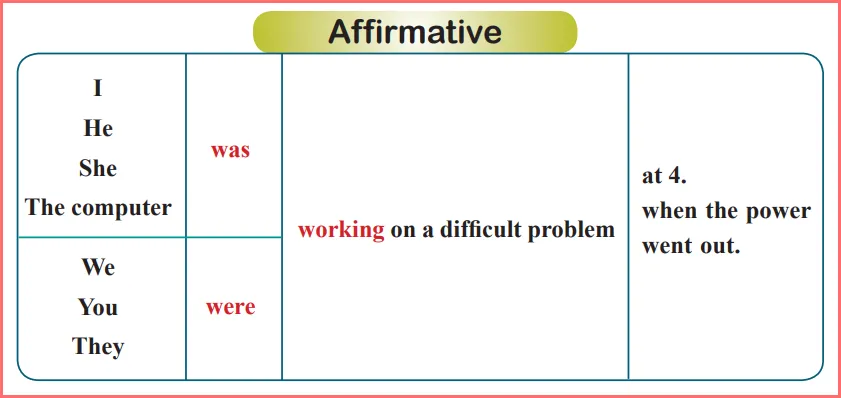
🟦 The scientist was doing research in his laboratory during 1370.
🟦 Newton was sitting

🟦 Tina wasn’t reading a novel when her mother came in. She was
studying her English book.
🟦 Reza was not doing an experiment when the phone rang. He was
solving a math problem.
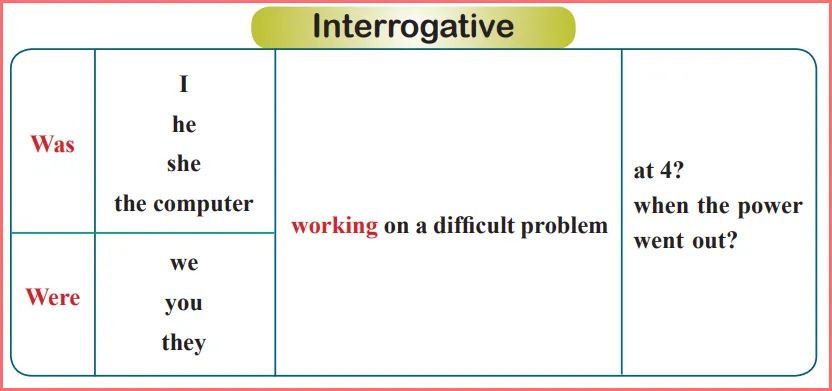
🟦 Was Mahsa doing her homework when her mother called?
🟦 Were they talking when the teacher came in?
B. Read the following examples – Pages 27 – 28
آموزش جداول و ترجمه کامل مثالهای گذشته استمراری (زبان یازدهم فنی)
| Subject (فاعل) | To Be | Verb + ing | Time Clause (قید زمان / جمله واره) |
|---|---|---|---|
| I / He / She / The computer | was | working on a difficult problem | at 4. when the power went out. |
| We / You / They | were |
| Subject (فاعل) | To Be + not | Verb + ing | Time Clause (قید زمان / جمله واره) |
|---|---|---|---|
| I / He / She / The computer | wasn’t | working on a difficult problem | at 4. when the power went out. |
| We / You / They | weren’t |
| To Be | Subject (فاعل) | Verb + ing | Time Clause (قید زمان / جمله واره) |
|---|---|---|---|
| Was | I / he / she / the computer | working on a difficult problem | at 4? when the power went out? |
| Were | we / you / they |
C. Tell your teacher how ‘past progressive’ is made.
C. Tell your teacher how ‘past progressive’ is made.
پاسخ فعالیت بخش C صفحه ۲۸ زبان یازدهم فنیحرفهای (درس اول: The Value of Knowledge)
D. Read the ‘Conversation’ and underline all ‘past progressive verbs’.
D. Read the ‘Conversation’ and underline all ‘past progressive verbs’.
پاسخ تمرین بخش D صفحه ۲۸ زبان یازدهم فنیحرفهای (مشخص کردن افعال گذشته استمراری مکالمه)
2. was translating
3. were surfing
E. Read the following paragraph and choose the best verb forms.
It was raining yesterday. I was sitting/sit in the living room. I
watched/was watching a movie about a great scientist, Ghiyath
al-Din Jamshid Kashani. He was a great inventor. He was from
Kashan. His father was a doctor. Jamshid is/was very interested
in numbers and planets. Actually, he invented/invent many
interesting things when he was solving/solved math problems.
Sadly, this scientist has/had a very short life. Someone
was killing/killed him when he worked/was working in his
observatory. He was/is only 42 years old.
E. Read the following paragraph and choose the best verb forms.
پاسخ تمرین بخش E صفحه ۲۹ زبان یازدهم فنیحرفهای (انتخاب افعال مناسب گذشته ساده و استمراری)
F. Pair up and talk about the things you were doing at the given times.
1. Yesterday at 5
2. When the teacher came in
3. This morning at 5:30
4. When my father came home
F. Pair up and talk about the things you were doing at the given times.
پاسخ تمرین بخش F صفحه ۲۹ زبان یازدهم فنیحرفهای (مکالمه درباره کارهای گذشته با زمان گذشته استمراری)
• سؤالی:
What were you doing at ...? (در فلان ساعت داشتی چهکار میکردی؟)
• پاسخ:
I was + verb-ing ... (من داشتم … انجام میدادم.)
G. Go to Part II of your Workbook and do A, B and C.
ج. به بخش دوم کتاب کار خود بروید و موارد A، B و C را انجام دهید.
جواب و ترجمه See Also صفحه ۳۰ درس ۱ انگلیسی یازدهم فنی
A. Read the following examples with ‘Self Pronouns’.
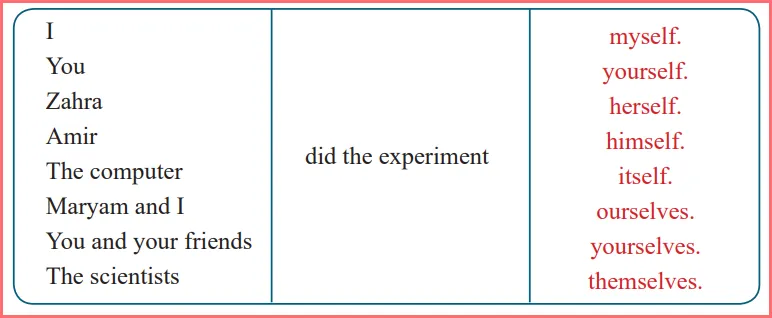
🟦 Alexander Graham Bell invented the telephone himself.
🟦 Marie Curie found uranium herself.
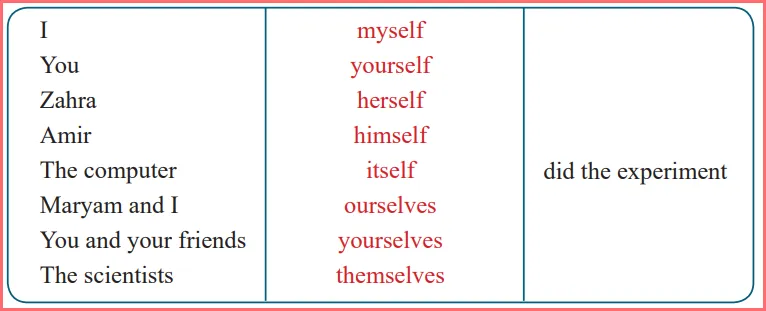
🟦 Alexander Graham Bell himself invented the telephone.
🟦 Marie Curie herself found uranium.
See Also – Self Pronouns (ضمایر تأکیدی و انعکاسی)
پاسخ، ترجمه و نکات گرامری بخش A صفحه ۳۰ درس اول زبان انگلیسی یازدهم فنیحرفهای
به کلماتی مانند myself، himself، herself و … ضمایر تأکیدی یا انعکاسی میگویند. این ضمایر به دو صورت در جمله به کار میروند:
۱. در پایان جمله: برای تأکید بر اینکه کار توسط خود شخص و بدون کمک دیگران انجام شده است.
۲. بلافاصله بعد از فاعل: برای تأکید مستقیم روی خود فاعل که «خودِ او شخصاً» این کار را انجام داد.
| Subject (فاعل) | Verb & Object (فعل و مفعول) | Self Pronoun (ضمیر) | معنی فارسی جمله |
|---|---|---|---|
| I | did the experiment | myself. | من آزمایش را خودم انجام دادم. |
| You | did the experiment | yourself. | تو آزمایش را خودت انجام دادی. |
| Zahra (she) | did the experiment | herself. | زهرا آزمایش را خودش انجام داد. |
| Amir (he) | did the experiment | himself. | امیر آزمایش را خودش انجام داد. |
| The computer (it) | did the experiment | itself. | کامپیوتر آزمایش را خودش انجام داد. |
| Maryam and I (we) | did the experiment | ourselves. | من و مریم آزمایش را خودمان انجام دادیم. |
| You and your friends (you جمع) | did the experiment | yourselves. | شما و دوستانتان آزمایش را خودتان انجام دادید. |
| The scientists (they) | did the experiment | themselves. | دانشمندان آزمایش را خودشان انجام دادند. |
| Subject (فاعل) | Self Pronoun (ضمیر) | Verb & Object (فعل و مفعول) | معنی فارسی جمله |
|---|---|---|---|
| I | myself | did the experiment | خودِ من آزمایش را انجام دادم. |
| You | yourself | did the experiment | خودِ تو آزمایش را انجام دادی. |
| Zahra | herself | did the experiment | خودِ زهرا آزمایش را انجام داد. |
| Amir | himself | did the experiment | خودِ امیر آزمایش را انجام داد. |
| The computer | itself | did the experiment | خودِ کامپیوتر آزمایش را انجام داد. |
| Maryam and I | ourselves | did the experiment | خودِ من و مریم آزمایش را انجام دادیم. |
| You and your friends | yourselves | did the experiment | خودِ شما و دوستانتان آزمایش را انجام دادید. |
| The scientists | themselves | did the experiment | خودِ دانشمندان آزمایش را انجام دادند. |
• ضمایر جمع (پسوند selves-): ourselves (خودمان) | yourselves (خودتان) | themselves (خودشان)
B. Go to Part II of your Workbook and do D.
ب. به بخش دوم کتاب کار خود بروید و تمرین «D» را انجام دهید.
پاسخ و معنی Listening and Speaking صفحه ۳۱ و ۳۲ درس اول انگلیسی یازدهم فنی
Speaking Strategy
Narrating a story
راهبرد گفتاری
روایت کردن یک داستان
A. You may use ‘simple past’ and ‘past progressive’ together to narrate a story. Past progressive is sometimes used to give background/situation to the story.
Last night at 8 o’clock we were sitting in the hall. We were talking
about our day. Suddenly we heard a noise. My father went out to
see what was making the noise. When my father was walking in the
yard, we went to the kitchen. We saw a kitty in the kitchen. It was
eating a cookie. The Poor kitty was hungry.
Listening and Speaking (Pages 31 & 32)
پاسخ، راهبرد گفتاری و ترجمه خطبهخط درس اول زبان انگلیسی یازدهم فنیحرفهای
“You may use ‘simple past’ and ‘past progressive’ together to narrate a story. Past progressive is sometimes used to give background/situation to the story.”
ترجمه قاعده: شما میتوانید از «گذشته ساده» و «گذشته استمراری» در کنار هم برای روایت یک داستان استفاده کنید. گذشته استمراری معمولاً برای بیان فضا، وضعیت اولیه و پسزمینه داستان به کار میرود.
🏷 راهنمای رنگها در متن داستان:
• آبی (گذشته استمراری): کارهایی که در گذشته در جریان بودند (Background).
• نارنجی (گذشته ساده): اتفاقاتی که ناگهان رخ دادهاند یا کار دیگری را قطع کردهاند.
| نوع نقش در داستان | زمان گرامری | افعال بهکاررفته | کاربرد |
|---|---|---|---|
| پسزمینه و فضا (Background) | گذشته استمراری (Past Progressive) | were sitting, were talking, was walking, was eating | توصیف کارهایی که در پسزمینه داستان در حال رخ دادن بودند |
| اتفاقات اصلی (Main Events) | گذشته ساده (Simple Past) | heard, went, saw, was | بیان وقایع و اتفاقات قطعی و ناگهانی که روند داستان را شکل میدهند |
When I was doing my homework, the phone rang. (وقتی داشتم تکالیفم را انجام میدادم، تلفن زنگ زد.)
You may use the following patterns to ask and answer about stories that happened in the past.
What were you doing (yesterday at 8)?
What was happening (yesterday at 8)?
Listening and Speaking – Sentence Patterns (Page 31)
پاسخ، ترجمه و الگوهای جملهسازی برای پرسش و پاسخ درباره داستانهای گذشته (انگلیسی یازدهم فنیحرفهای)
| سؤال با عبارت زمانی جدید (English) | ترجمه فارسی |
|---|---|
| What were you doing yesterday at 5? | دیروز ساعت ۵ داشتی چه کار میکردی؟ |
| What were you doing when the teacher came in? | وقتی معلم وارد شد داشتی چه کار میکردی؟ |
| What was happening this morning at 5:30? | امروز صبح ساعت ۵:۳۰ چه اتفاقی داشت میافتاد؟ |
| What were you doing when your father came home? | وقتی پدرت به خانه آمد داشتی چه کار میکردی؟ |
۱. دقت کنید که کلمه پرسشی What was happening همیشه با فعل مفرد was ساخته میشود چون فاعلِ اتفاق نامشخص و مفرد در نظر گرفته میشود.
۲. برای فاعل you حتماً از were استفاده میکنیم:
What were you doing? اما در پاسخ چون فاعل من (I) میشود، از was استفاده میکنیم: I was studying.
B. Listen to the following conversations and complete the sentences.
Conversation 1

1. Leila was ………………………………………………………………………………….. .
2. The driver ………………………………………………………………………………. .
Pair up and ask your friends about the things they were doing last weekend in the afternoon. You may use the verbs in the box.
talk to someone, read a book, watch TV, play in the yard
Conversation 2

1. Amir ………………………………………………………………………………………… .
2. Amir was ………………………………………………………………………………… .
Pair up and ask your friends about the things they did or didn’t do when they were solving a problem. You may use the verbs in the box.
study hard, work long hours, quit working, feel weak, try hard, give up trying
Listening and Speaking – Part B (Page 32)
پاسخ کامل، متن فایلهای صوتی، ترجمه خطبهخط و فعالیتهای دونفره (انگلیسی یازدهم فنیحرفهای)
(با کسی صحبت کردن، کتاب خواندن، تلویزیون تماشا کردن، در حیاط بازی کردن)
(سخت درس خواندن، ساعتهای طولانی کار کردن، دست از کار کشیدن، احساس ضعف کردن، سخت تلاش کردن، تسلیم شدن/از تلاش دست کشیدن)
پاسخ و معنای Pronunciation صفحه ۳۳ و ۳۴ درس ۱ انگلیسی یازدهم فنی
A. Listen to the following sentences. Notice how the speakers say some words with more emphasis.
1. Were you doing the research? No, Ali was.
2. Who broke the window? It wasn’t me.
3. Why were the students making so much noise? They weren’t.
The workers were making noises.
4. Is it Jim’s car over there? No, his car is white.
When you want to put special emphasis
on something, you say it more strongly.
Pronunciation – Stress on Specific Words (Pages 33 & 34)
معنی، نکات تلفظی و تحلیل استرس تأکیدی (انگلیسی یازدهم فنیحرفهای و کاردانش – درس اول)
(در زبان انگلیسی به این پدیده Emphatic Stress یا استرس تأکیدی میگویند که گوینده برای اصلاح یک اشتباه یا جلب توجه شنونده از آن استفاده میکند.)
| شماره | واژه دارای تأکید (Stressed) | معنی واژه | دلیل تأکید بیشتر |
|---|---|---|---|
| ۱ | Ali | علی | مشخص کردن فاعل واقعی تحقیق به جای “you” |
| ۲ | me | من | رد قاطعانه مسئولیت شکستن پنجره |
| ۳ | weren’t / workers | نبودند / کارگران | رد ادعای سر و صدا و معرفی منبع واقعی صدا |
| ۴ | white | سفید | اثبات تعلق نداشتن خودرو به خاطر رنگ آن |
B. One word in each sentence is red. Say the sentence with emphatic stress on that word. Can you guess how the meanings of the sentences are different?
1. Mina’s dress is white.
2. Mina’s dress is white.
3. Mina’s dress is white.

Pronunciation – Part B (Page 34)
تمرین استرس تأکیدی و تفاوت معنای جملات (انگلیسی یازدهم فنیحرفهای و کاردانش)
| شماره جمله | کلمه دارای تأکید (Red Word) | مقصود و مفهوم دقیق گوینده |
|---|---|---|
| ۱ | Mina’s | اشاره به صاحب لباس (مالکیت شخص خاص) |
| ۲ | dress | اشاره به نوع شیء (تأکید روی خود لباس) |
| ۳ | white | اشاره به رنگ مشخص لباس |
C. Go to Part IV of your Workbook and do it.
ج. به بخش چهارم کتاب کار خود بروید و آن را انجام دهید.
جواب و معنی Writing صفحه ۳۵ ، ۳۶ و ۳۷ درس اول انگلیسی یازدهم فنی
Verb
A verb is a word that expresses an action or a state of being.
1) Action verbs:
The verbs that express an action. For example:
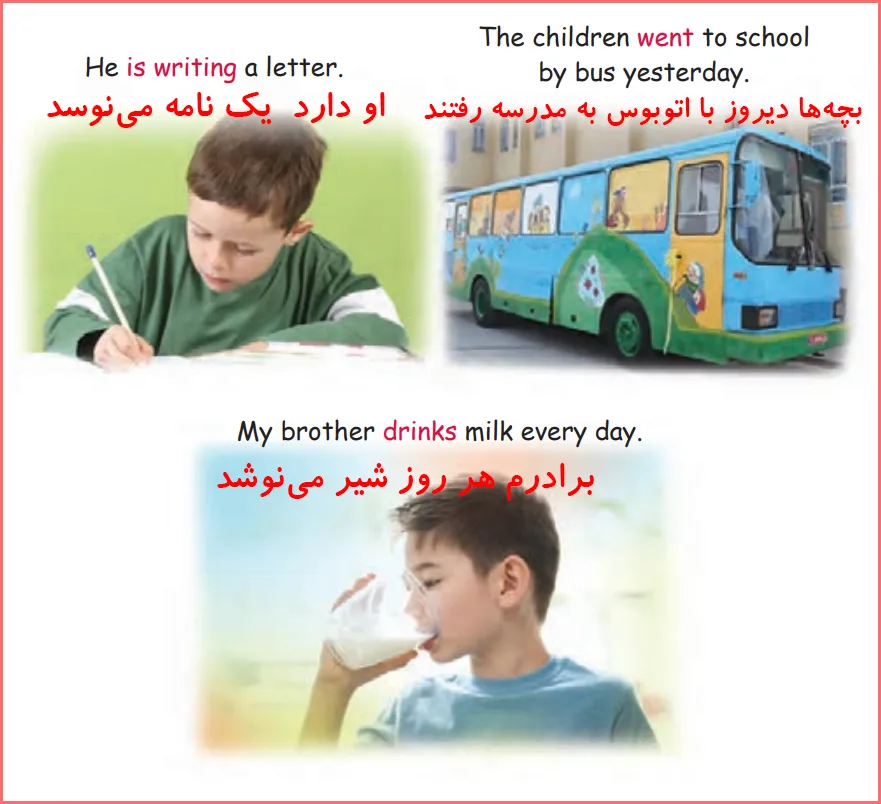
2) State verbs:
The verbs that express a state rather than an action. They usually relate to emotions, thoughts, and senses.

Writing – Action Verbs & State Verbs (Pages 35, 36 & 37)
معنی، قواعد دستوری و پاسخ تمرینهای نوشتاری زبان انگلیسی یازدهم فنیحرفهای و کاردانش
| دستهبندی فعل | نمونه افعال پرکاربرد درس | ویژگی گرامری و تشخیصی |
|---|---|---|
| Action Verbs (افعال کنشی) | write, go, drink, study, watch, play, run | انجام کار فیزیکی و ارادی؛ معمولاً میتوان آنها را با -ing در زمانهای استمراری به کار برد. |
| State Verbs (افعال حالتی) | believe, love, like, know, feel, understand, hate, want | بیان حالات فکری، حسی و عاطفی؛ این افعال معمولاً در زمانهای استمراری (-ing) استفاده نمیشوند. |
A. Read the ‘Reading’. Find ‘the action and state verbs’.
Writing – Part A (Page 36)
پیدا کردن افعال کنشی و حالتی از متن Reading درس اول (انگلیسی یازدهم فنیحرفهای)
بر اساس متن Reading درس اول (درباره ارزش دانش، توماس ادیسون و طاهره صفارزاده)، افعال بهکاررفته به دو دسته کنشی و حالتی تقسیم میشوند که نمونههای مهم آن در جدول زیر دستهبندی شدهاند:
| ردیف | Action Verbs (افعال کنشی / حرکتی) | State Verbs (افعال حالتی / ذهنی و عاطفی) | معنی کلی |
|---|---|---|---|
| ۱ | invent | know | اختراع کردن / دانستن |
| ۲ | work | understand | کار کردن / فهمیدن |
| ۳ | read | like | خواندن / دوست داشتن |
| ۴ | write | believe | نوشتن / باور داشتن |
| ۵ | study | want | مطالعه کردن / خواستن |
💡 نکته آموزشی برای هنرجویان پایه یازدهم:
• افعال کنشی (Action Verbs): کارهایی هستند که با تحرک یا صرف انرژی انجام میشوند (مثل کار کردن، نوشتن و اختراع کردن) و میتوان آنها را به شکل استمراری (-ing) نوشت.
• افعال حالتی (State Verbs): وضعیتهای فکری، درونی یا عاطفی را نشان میدهند (مثل دانستن، باور داشتن و خواستن) و معمولاً به صورت ساده (بدون -ing) به کار میروند.
Simple and Continuous Forms
1) We can use the simple or the continuous form of action verbs:
🟦 I cleaned my room yesterday.
🟦 I am cleaning my room now.
2) We usually use the simple form rather than the continuous form of state verbs:
🟦 I don’t know the name of the street.
🟦 Kids love chocolate.
Simple and Continuous Forms (Page 37)
فرمهای ساده و استمراری افعال کنشی و حالتی (انگلیسی یازدهم فنیحرفهای و کاردانش)
❌ نادرست: نمیگوییم: I am not knowing…
❌ نادرست: نمیگوییم: Kids are loving…
| نوع فعل | آیا فرم ساده مجاز است؟ | آیا فرم استمراری (-ing) مجاز است؟ |
|---|---|---|
| Action Verbs (کنشی) مانند: clean, write, drink |
✔ بله (گذشته ساده، حال ساده و…) | ✔ بله (حال استمراری، گذشته استمراری و…) |
| State Verbs (حالتی) مانند: know, love, believe, need |
✔ بله (فرم استاندارد و همیشگی) | ❌ خیر (معمولاً در زمان استمراری به کار نمیروند) |
B. Read the following sentences and choose the best verb forms:
1. I (don’t like / am not liking) reading newspapers.
2. At 3 o’clock yesterday, I (needed / was needing) a taxi.
3. She (watches / is watching) television at the moment.
4. I (want / am wanting) to go to the cinema tonight.
5. Unfortunately, he (didn’t remember / wasn’t remembering) my name.
Writing – Part B (Page 37)
انتخاب بهترین شکل فعل (ساده یا استمراری) – انگلیسی یازدهم فنیحرفهای و کاردانش
دلیل: فعل like (دوست داشتن) یک فعل حالتی (State Verb) است و به حالت استمراری (-ing) به کار نمیرود، بنابراین فرم ساده منفی آن درست است.
دلیل: با وجود مشخص بودن زمان گذشته، فعل need (نیاز داشتن) یک فعل حالتی است و گذشته استمراری نمیگیرد؛ پس فرم گذشته ساده (needed) صحیح است.
دلیل: فعل watch یک فعل کنشی (Action Verb) است و وجود قید زمان at the moment (هماکنون) نشان میدهد کار هماکنون در حال انجام است و باید از حال استمراری استفاده شود.
دلیل: فعل want (خواستن/تمایل داشتن) از افعال حالتی است و برای بیان خواسته حتی در زمان حال یا آینده نزدیک، به شکل ساده به کار میرود و -ing نمیگیرد.
دلیل: فعل remember (به یاد داشتن/به خاطر آوردن) یک فعل ذهنی و حالتی است و فرم استمراری نمیگیرد؛ پس گذشته ساده منفی (didn’t remember) صحیح است.
| شماره سوال | پاسخ درست (Correct Form) | علت انتخاب |
|---|---|---|
| ۱ | don’t like | فعل حالتی (عدم استفاده از -ing) |
| ۲ | needed | فعل حالتی (عدم استفاده از گذشته استمراری) |
| ۳ | is watching | فعل کنشی + قید زمان حال استمراری (at the moment) |
| ۴ | want | فعل حالتی بیانگر تمایل و خواستن |
| ۵ | didn’t remember | فعل ذهنی/حالتی (فرم ساده در گذشته) |
جواب و ترجمه تمرین صفحه ۳۹ درس ۱ انگلیسی یازدهم فنی
A. Listen to the first part of a story.
1. Fill in the blanks based on what you just heard.
Sajjad was taking pictures yesterday at ……………….
When he was taking pictures ………………. came to help.
2. Listen again and list ‘past progressive verbs’.
Reviewing Lesson 1 – Part A (Page 39)
تمرین شنیداری و گرامر گذشته استمراری (انگلیسی یازدهم فنیحرفهای و کاردانش)
When he was taking pictures, the firefighters came to help.
• سجاد دیروز در پارک در حال عکاسی بود.
• وقتی او در حال عکاسی بود، آتشنشانها برای کمک آمدند.
- was taking pictures (در حال عکاسی کردن بود)
- were working quickly (به سرعت در حال کار کردن بودند)
- were putting out the fire (در حال خاموش کردن آتش بودند)
- were standing near the building (نزدیک ساختمان ایستاده بودند)
- were watching the fire (تماشای آتش بودند)
- was talking with people (در حال صحبت با مردم بود)
📖 ترجمه متن داستان (بخش B صفحه ۳۹ – برای مطالعه بهتر هنرجویان):
«آتشنشانها از ماشینهایشان بیرون پریدند. آنها به سرعت کار میکردند. آنها در حال خاموش کردن آتش بودند. مردم نزدیک ساختمان ایستاده بودند. آنها آتش را تماشا میکردند. خطرناک بود. سجاد دوربینش را کنار گذاشت و از مردم خواست که محل را ترک کنند. وقتی او با مردم صحبت میکرد، آتشنشانها آتش را خاموش کردند.»
| فعل کمکی گذشته | ساختار فعل اصلی | مثال از متن درس |
|---|---|---|
| was (برای فاعلهای مفرد: I, He, She, It) | فعل اصلی + -ing | Sajjad was taking pictures |
| were (برای فاعلهای جمع: We, You, They) | فعل اصلی + -ing | They were working quickly |
B. Now listen to the rest of the story.
The firefighters jumped out of their cars. They were working
quickly. They were putting out the fire. People were standing near
the building. They were watching the fire. It was dangerous. Sajjad
put his camera aside and asked people to leave. The firefighters
put out the fire when he was talking with people.
3. Underline all ‘past progressive verbs’.
Reviewing Lesson 1 – Part B & Item 3 (Page 39)
متن داستان، خطکشیدن زیر افعال گذشته استمراری و ترجمه خطبهخط برای پایه یازدهم فنیحرفهای
- were working (از ریشهٔ work)
- were putting out (از ریشهٔ put out)
- were standing (از ریشهٔ stand)
- were watching (از ریشهٔ watch)
- was talking (از ریشهٔ talk)
| ردیف | فعل گذشته استمراری | فاعل (Subject) | معنی در متن |
|---|---|---|---|
| ۱ | were working | They (آتشنشانها) | در حال کار کردن بودند |
| ۲ | were putting out | They (آتشنشانها) | در حال خاموش کردن بودند |
| ۳ | were standing | People (مردم) | ایستاده بودند |
| ۴ | were watching | They (مردم) | داشتند تماشا میکردند |
| ۵ | was talking | he (سجاد) | در حال صحبت کردن بود |
C. Work in pairs. Ask and answer. Use appropriate sentence stress and intonation.

Speaking & Listening – Part C (Page 39)
پرسش و پاسخ دونفره درباره داستان سجاد و آتشسوزی (انگلیسی یازدهم فنیحرفهای)
| حباب | سوال (نفر سمت چپ) | پاسخ داخل حباب (نفر سمت راست) |
|---|---|---|
| حباب اول (بالا) | What was Sajjad doing in the park? | He was taking pictures. |
| حباب دوم (وسط) | Did Sajjad put out the fire? | No, he didn’t. (یا: The firefighters did.) |
| حباب سوم (پایین) | Were the firefighters working slowly? | No, they were working quickly. (یا پاسخ کوتاه: No, they weren’t.) |
پاسخ درس بعدی: جواب درس دوم انگلیسی یازدهم فنی حرفه ای
پاسخ درس بعدتر: جواب درس ۱ کتاب کار انگلیسی یازدهم فنی حرفه ای
✅ در این مطلب گام به گام درس 1 کتاب زبان انگلیسی پایه یازدهم رشته های فنی حرفه ای و هنرستان و کاردانش را مرور کردیم. جهت مشاهده کام به گام سایر دروس کافیست نام آن را به همراه عبارت ماگرتا در گوگل جست و جو نمایید. همچنین اگر سوالی دارید آن را از قسمت دیدگاه با سایر دانش آموزان به اشتراک بگذارید.